

China ran an all-hands-on-deck initiative to eliminate extreme poverty from within all of its territories up until 2020. Does China now have people in poverty? Of course, but not ‘extreme poverty’ or ‘absolute poverty,’ which are technical terms used by World Bank and the UN. Those living below the international poverty line have been raised above that line. China uses an enormous tool kit to accomplish this feat. One of those has been to get families which have lived in historically impoverish conditions into modern homes.
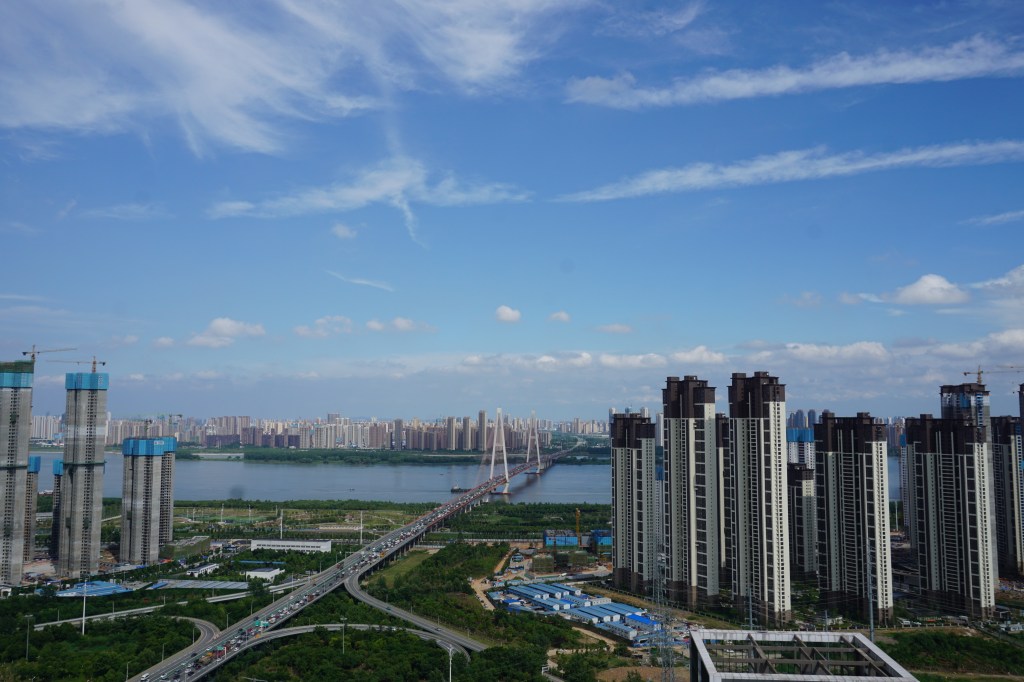
I landed in Kashgar on a cool day in the early summer the first time I went to Xinjiang. Not much time for dilly dally, I left in a caravan of other reporters early the next morning. It was my first time seeing the Taklamakan desert, and in 2022, it was still very much just a desert. China hadn’t yet ringed it with 3,000+ kilometers of new forests. We drove half the day south to Hotan. After another day, we pushed off and drove another day to Pishan county, one of the poorest places in China at that time. What struck me at first was that it wasn’t striking. It looked like any other community in China. Tall apartment complexes with water, heating, and electricity, like anywhere else in the modern world. And that’s what made it so special.
Chinese cadres of workers, dispatched by the Communist Party of China has spent many years cataloguing each family. And these were those that had lived for centuries in dilapidated villages in the deserts, hanging on in premodern conditions. But China was becoming a great economic power once again, but in a new age. And it was decided that these families would be given a new lease on life. Each family, was offered their own apartment, each with two or more bedrooms, each with a kitchen, living room, running water, running plumbing, a bathroom, and all the amenities one might expect. I met a family and toured their home. They were proud to share their home with us and offered us snacks.
But the families got more than that. The community, of hundreds of apartments also received a staffed school, a medical clinic, and each family received a massive greenhouse a stroll away. The families were told they could use the green houses for subsistence or for farming for the market. Agronomists and others volunteered to train the newly landed families on using the green houses. They were given telecommunications, and smart phones and trained on how to use them and how to find the best markets for their produce. In short, they were given their own new farms and new livelihoods.
Nearby too was a massive warehouse-like structure meant to be a bazaar. Inside, the families could lease a shop and sell goods. I strolled through and bought some snacks. Few housing developments were this charitable. In many other areas of China, families were offered new apartments in modern areas for as low as 5,000 RMB, or about $800 dollars. That’s not rent. That was the purchasing price. Many took the option. Some didn’t. The families who moved into the new apartments also got to keep their old homes too.
China’s tools for housing their poorest include homes. Giving affordable or even free homes to the poorest is something we should learn from in the west. We are strengthened by our humanity. And in China, they are strong.

 The Shared Future Institute
Leave a comment