
I recently took my second trip to Xizang, and what I found shocked me. The world should know the reality of what is happening. The reality of how China treats its minorities, particularly Tibetans, is of great importance to the international community and is discussed often. Sadly, few Western based reporters take the time to go for themselves. As someone who has visited schools there in 2023, and again just now in 2025, I want to share my experience.
My first experience of travelling to Xizang was in 2023. What I noticed instantly surprised me. The bus from the airport to Lhasa was an hour long or so. And I, I was taking pictures of highway signs. Why? They are all bilingual in Hanzi, and Tibetan. Every single sign I saw. Given the lengths Western mainstream media have gone to convince us that China was erasing Tibetan language and culture, I was truly shocked at how easy it was to see that is not true. Arriving in Lhasa the phenomenon continued.
All the restaurant signs, street signs, even menus, elevator emergency signs, and everything else was bilingual. After visiting Jokhang Temple, and seeing the monks practicing Tibetan Buddhism out in the open, and freely, we left the city. We spent the next week exploring hundreds of kilometers of the region. One place we stopped was Milin, to visit Doka Primary School. There, I saw another reality which contradicts the narrative coming from Western media.
Children at the school learn Mandarin, Chinese, and English. The hallways were covered in the style of childlike posters of apple trees with students’ names, pictures of animals, and numbers. One thing stood out though. There were words in Hanzi, Tibetan, and English too. I filmed a video about it, and I asked to talk to two kids. I asked them to teach me how to say hello in Tibetan. They did. I asked them to write ‘how are you?” in Tibetan script. They could. It became clear, that China is preserving their minority language. For my first trip to the region, my perspective was forever changed. I hadn’t seen everything yet. There was more I still didn’t know.

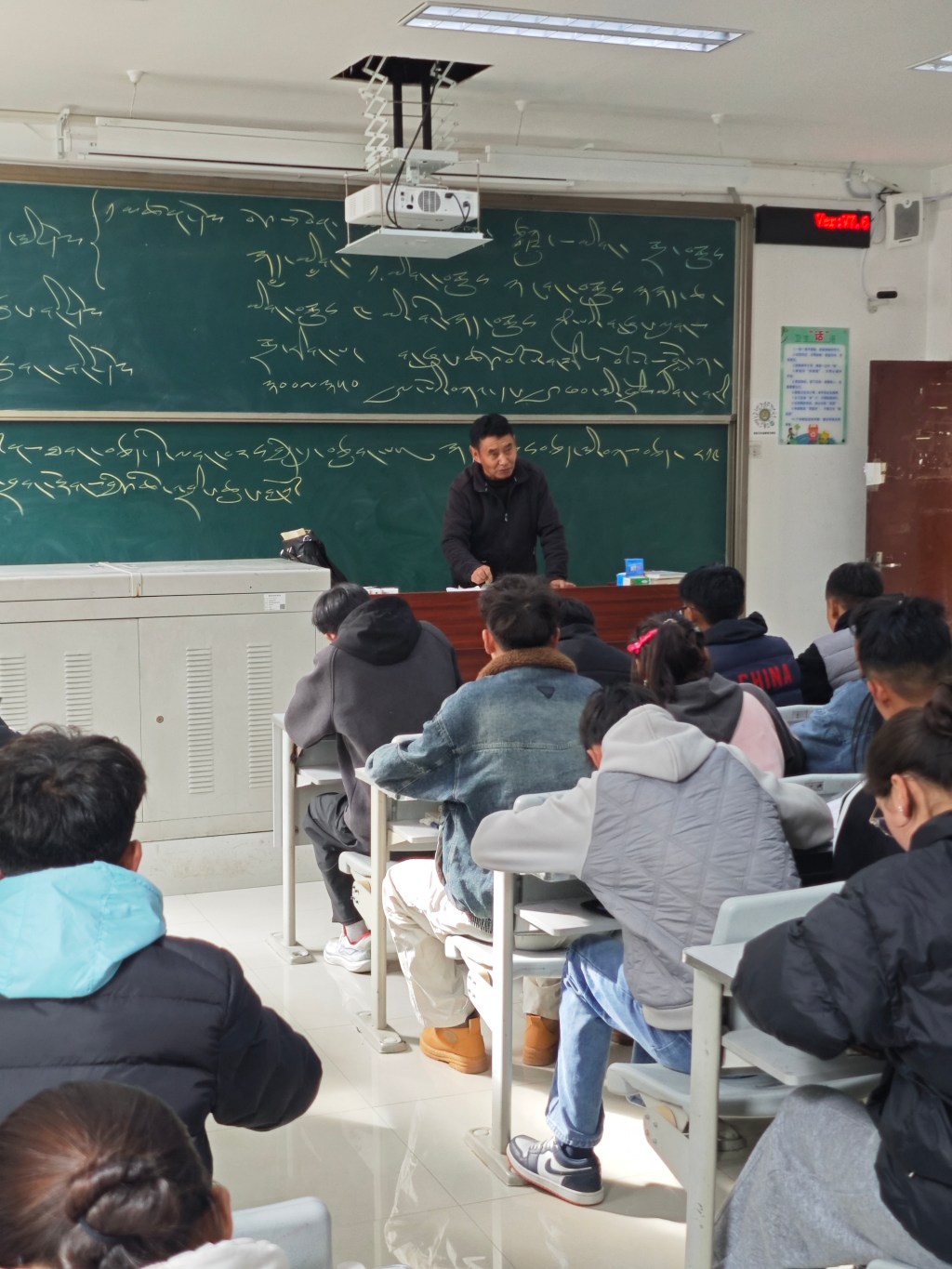
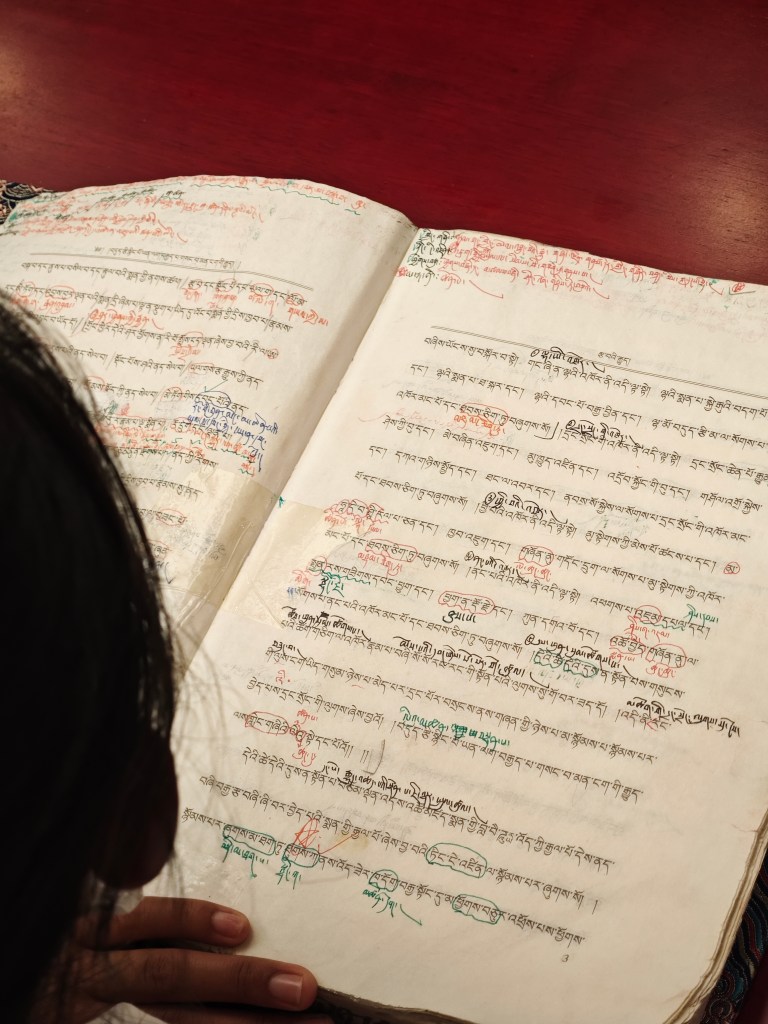
In 2025, just now, I took another week-long trip to Xizang. This time my plane landed in Nyingchi. My purpose: to visit as many schools as I could. My first stop was a local university, the Xizang Agricultural and Animal Husbandry University. I asked to be shown classes teaching Tibetan, but I wasn’t prepared for what I saw. The first class I entered was teaching the Tibetan alphabet, but these were non-Tibetan students. It turns out that all non-Tibetans are required to learn Tibetan at this university. The students in the class were primarily Han majority ethnic students. I checked their books and found notes in pen for the first couple months of school.
In the next classroom, the local Tibetan students, who had been studying Tibetan their whole lives, were learning advanced Tibetan composition from a Tibetan teacher. All the books were entirely in the Tibetan language, and all were fluent in the language. I continued to tour, and found Tibetan music, dance, and even archery were active activities at the university. My conclusion is that not only is Tibetan culture and language being preserved, but that Tibetan language and culture were finding new, fertile soil in the minds of other Chinese ethnic groups, as well. Far from Tibetan being erased, it was, and is, growing and spreading.

Over the course the next week, I attended numerous schools, over a stretch of hundreds more kilometers of travel. I visited Nyingchi Vocational and Technical School, Nyingchi No. 1 Middle School, Anrao Township Primary School in Shannan city, and numerous villages as well.
Everywhere I went, it was the same story. Every school taught its students in both Tibetan and Mandarin. Sometimes they taught a little English too. Growing up, they will have the tools to preserve their culture. They will also be able to compete for top universities in China, using their Mandarin skills. They will be capable of sharing their culture with their nation. And they will be equipped to tell their story to the world.

My experience of seeing Tibetan there, reflects my experience seeing the Uygur language in Xinjiang, and seeing the Mongolian language in Inner Mongolia. While Western based writers, having never been there, tell us there is cultural erasure, the opposite is true. China is a world leader in the preservation of minority culture.

 The Shared Future Institute
Leave a comment