
In an era defined by environmental urgency, electric vehicles are set to transport us to a better future. Yet, misconceptions persist, particularly around their safety. Often, social media pundits post standalone videos of EVs burning, the thesis: EVs are dangerous. But, is it true?
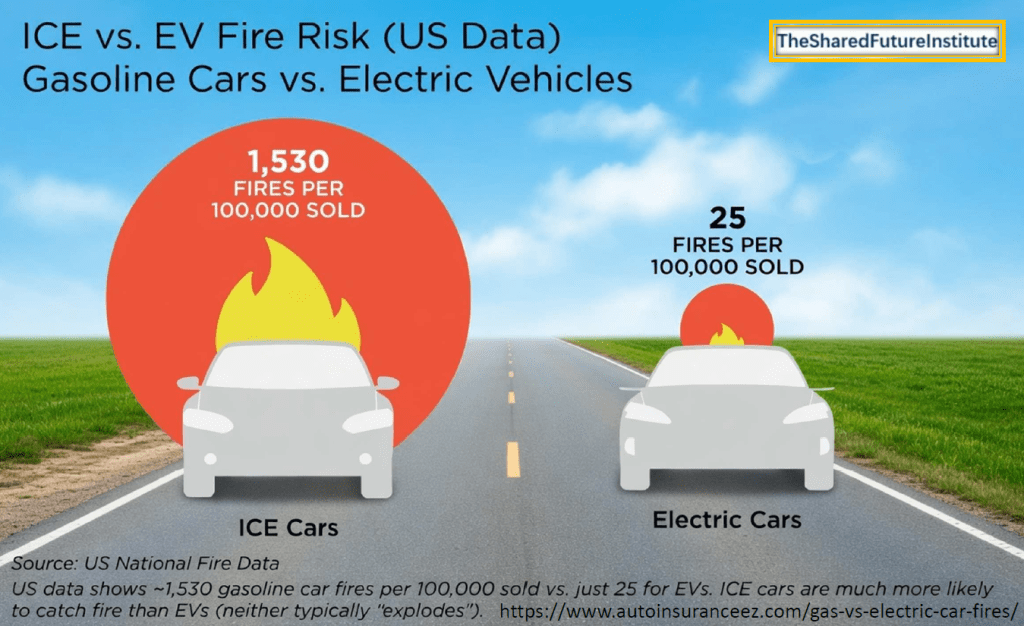
Gasoline-powered internal combustion engine (ICE) cars experience approximately 1,530 fires per 100,000 vehicles sold. In stark contrast, EVs see just 25 fires per 100,000 sold. This means ICE vehicles are over 60 times more likely to catch fire (https://www.autoinsuranceez.com/gas-vs-electric-car-fires/).
Importantly, neither type typically “explodes” in the Hollywood sense. EV battery incidents, often sensationalized in media, involve rare thermal runaway events, while gasoline fires stem from highly flammable fuels present in everyday crashes and leaks. EVs are not only safer statistically but equipped with sophisticated battery management systems that can prevent and contain issues effectively.
Public perception, fueled by viral videos of isolated incidents, sometimes overlooks the comprehensive safety advantages. EVs boast lower centers of gravity for better handling, advanced driver-assistance systems, and no risk of gasoline spills. As adoption grows, insurance data and real-world statistics continue to affirm their superior safety profile.
Beyond safety, adopting EVs is humanity’s collaborative step toward saving our world. Transportation accounts for a significant portion of global greenhouse gas emissions. By transitioning to electric power, especially when paired with renewable energy sources, we can dramatically slash CO2 output, improve air quality in our cities, and mitigate the worst effects of climate change. Cleaner air means healthier communities, reduced healthcare costs, and a more livable planet for future generations.
TESLA’s gigafactory is a bridge between the people of the USA and the people of China. Despite China’s robust domestic EV industry producing highly competitive models, Tesla’s Gigafactory Shanghai has thrived as a cornerstone of partnership. Since starting production, the facility has manufactured millions of vehicles, integrating local supply chains, creating jobs, and exporting globally. This cooperation drives technological innovation, scales production to lower costs, and accelerates the EV transition worldwide. Competition spurs excellence, while collaboration ensures shared benefits.
By choosing EVs, we don’t just change how we drive, we transform our relationship with the planet. This transition isn’t about one nation dominating but humanity rising together. EVs are safer than many realize and essential for our shared future. Let’s accelerate adoption through understanding, innovation, and global solidarity. The road ahead is electric, and together, we can drive it toward sustainability, and a future wherein we can all thrive.



 The Shared Future Institute
Leave a comment