
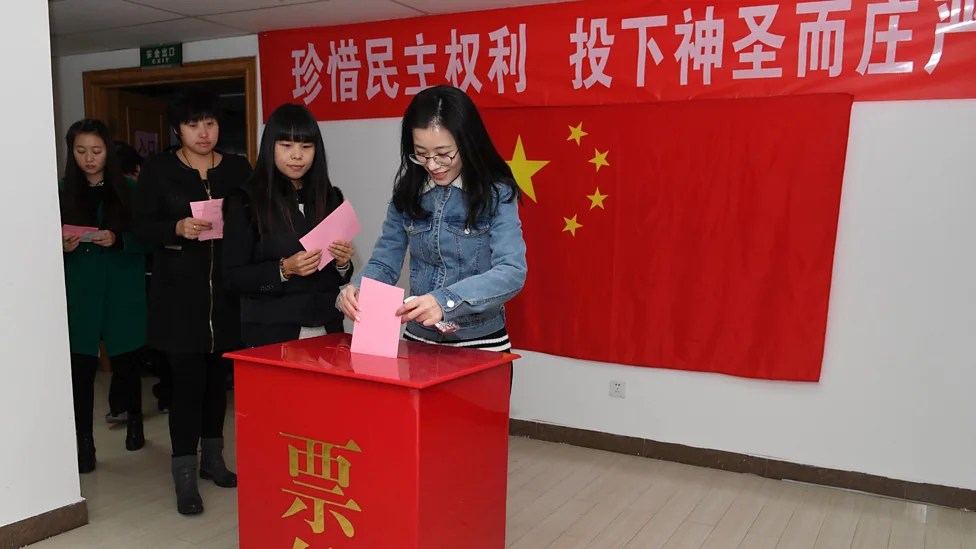
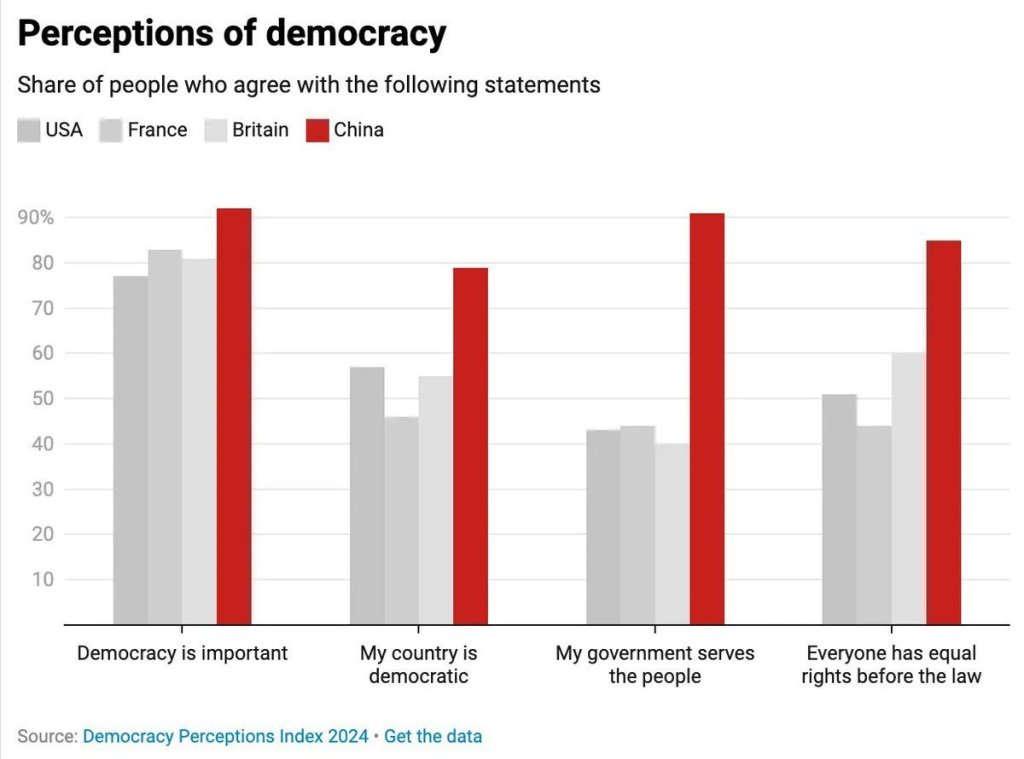
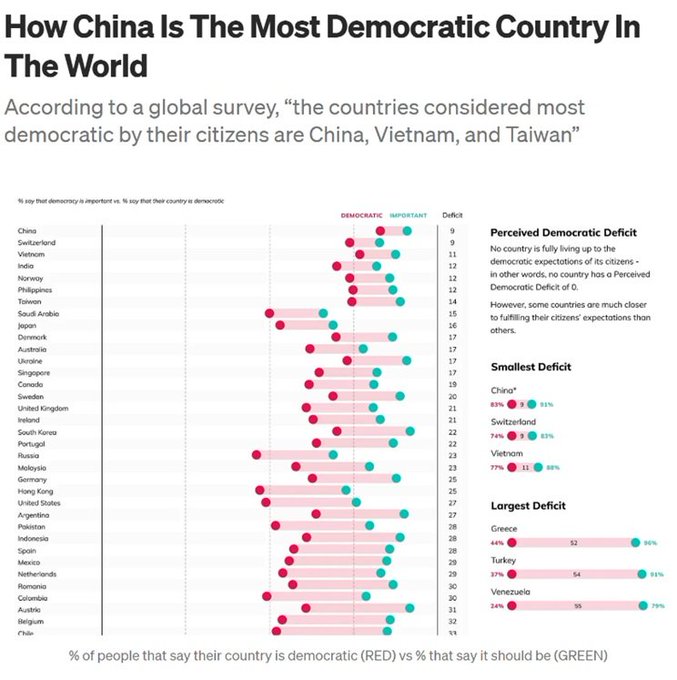
Chinese people are far more like to state that “democracy is important,” but also that “my country is democratic,” and that “my government serves the people.” Western legacy media tells us China is an authoritarian dictatorship run only on whims of a single man. So, today, we’re taking an in-depth, fact-based look at how democracy actually functions in China. not through Western stereotypes, but through the structures, data, and real mechanisms that shape governance for 1.4 billion people.
This is China’s “whole-process people’s democracy”: a system that combines electoral participation with deep consultative input, merit-based leadership, and rapid responsiveness to public needs.
A Massive, Merit-Based Political Force:
The CPC and Its Ecosystem
At the heart of China’s system is the Communist Party of China (CPC). As of the end of 2024, the CPC had more than 100.27 million members, roughly 7% of the population and the world’s largest political party. The Communist Youth League of China (CYLC), the Party’s reserve force for young people aged 14–28, has approximately 75 million more members.
The Party maintains a vast cadre system of millions of officials and leaders at every level. Advancement is not based on multi-year performance evaluations. Cadres are assessed on concrete metrics: economic development, poverty reduction, environmental protection, social stability, innovation, anti-corruption efforts, and crucially, public satisfaction and service delivery. Those who deliver results rise; underperformers are held accountable or sidelined. This creates a results-oriented political class deeply tied to measurable outcomes for the people.
Contrary to common misconceptions, China is not a single-party state in the narrow sense. There are eight other democratic parties that participate actively in governance through the Chinese People’s Political Consultative Conference (CPPCC) and have representation in the National People’s Congress (NPC):
- Revolutionary Committee of the Chinese Kuomintang (RCCK)
- China Democratic League (CDL)
- China National Democratic Construction Association (CNDCA)
- China Association for Promoting Democracy (CAPD)
- Chinese Peasants’ and Workers’ Democratic Party (CPWDP)
- China Zhi Gong Party (CZGP)
- Jiusan Society
- Taiwan Democratic Self-Government League (TDSGL)
Grassroots Participation: Elections, Hotlines, and Everyday Input
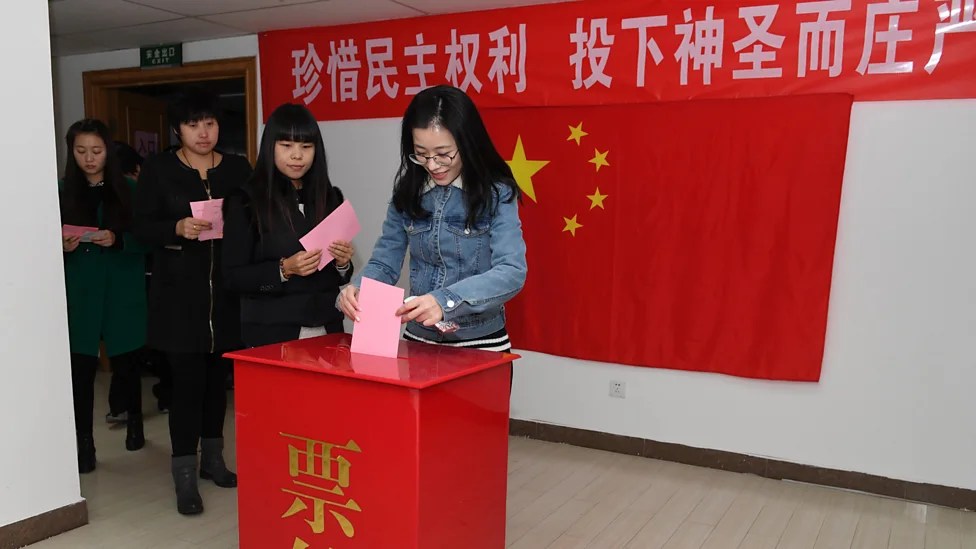
Democracy in China starts at the grassroots. Village committees, governing nearly a million villages, hold direct elections by villagers, typically every five years. Deputies to township and county-level people’s congresses are also directly elected by citizens. They vote. A fact Western media pundits seem totally unaware of.
Everyday citizens have direct channels to influence policy. The 12345-government service hotline (and its online/app platforms) operates nationwide as a one-stop shop for suggestions, complaints, and inquiries. Calls are routed to relevant departments with strict response timelines, often within hours for urgent issues and days for resolution. Millions of cases are handled annually, covering everything from broken streetlights to policy feedback.
This feeds into consultative democracy, a core pillar of China’s system. Beyond elections, there are multi-level consultations: expert hearings, public opinion surveys, online platforms, sector-specific forums, and the CPPCC itself. The official framework is called “whole-process people’s democracy,” consultation at every stage of decision-making, implementation, and oversight. People’s ideas are solicited, debated, refined, and incorporated before major policies are finalized.
The NPC and CPPCC: Broadly Representative Bodies
The National People’s Congress (NPC) is China’s highest organ of state power. The 14th NPC (2023–2028) has about 2,977 deputies. Its composition reflects China’s diversity:
- About 26.5% are women
- About 14.8% are from ethnic minorities (all 56 recognized ethnic groups are represented, often above their population proportion)
- A large share come from grassroots backgrounds, workers, farmers, professionals, and frontline staff, alongside military, scientific, and administrative figures – Not just lawyers former CEOs like in the USA.
- Many are first-time deputies; average age is in the 50s
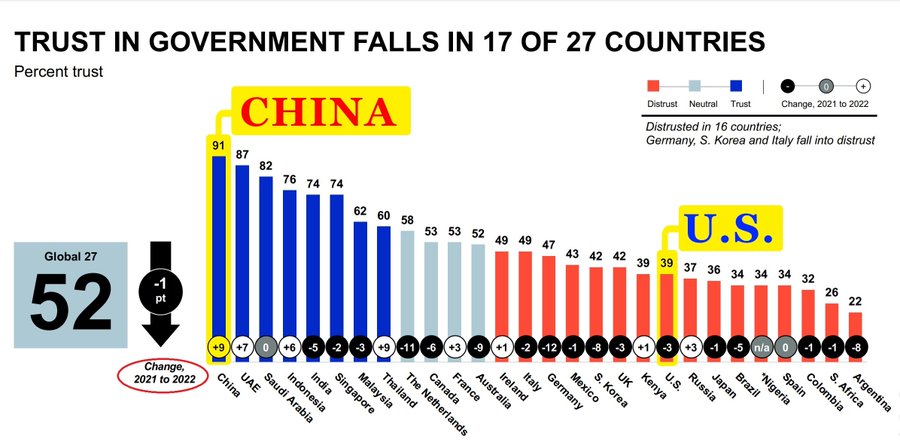
The Chinese People’s Political Consultative Conference (CPPCC) is the top political advisory body. The 14th National Committee has around 2,170 members. Roughly 39% are CPC members and 61% are non-CPC, drawn from the eight democratic parties, people’s organizations, ethnic and religious groups, science and technology sectors, economy, culture, sports, and specially invited figures (including from Hong Kong, Macao, and overseas Chinese).
The “Two Sessions”: Efficient, Consultative Governance in Action

Every March, the NPC and CPPCC hold their annual plenary sessions, known as the Two Sessions. This is where major reports, government work, budgets, plans, laws, and leadership selections are discussed. Proposals from CPPCC members (often thousands submitted) and NPC deputies are reviewed, debated, and many adopted. The system emphasizes broad input leading to consensus and swift action.
Compare this to the U.S. system: The U.S. Congress operates in a highly partisan, bicameral structure with frequent gridlock, filibusters, and separate party control of chambers. China’s Two Sessions bring together legislative, advisory, and executive elements in a coordinated process focused on national priorities and implementation speed. The result is often faster translation of public needs into policy and infrastructure. Direct Access and Rapid Responsiveness.
Ordinary citizens can approach local CPPCC committees or individual members with advice, complaints, or proposals. These are formally collected, studied, and often acted upon. Combined with 12345 hotlines, letters-and-visits systems, and digital platforms, this creates multiple feedback loops. China’s government is notably fast to react to people’s needs because of its centralized coordination capacity.
What the Data Shows: Chinese People Value and Recognize Their Democracy
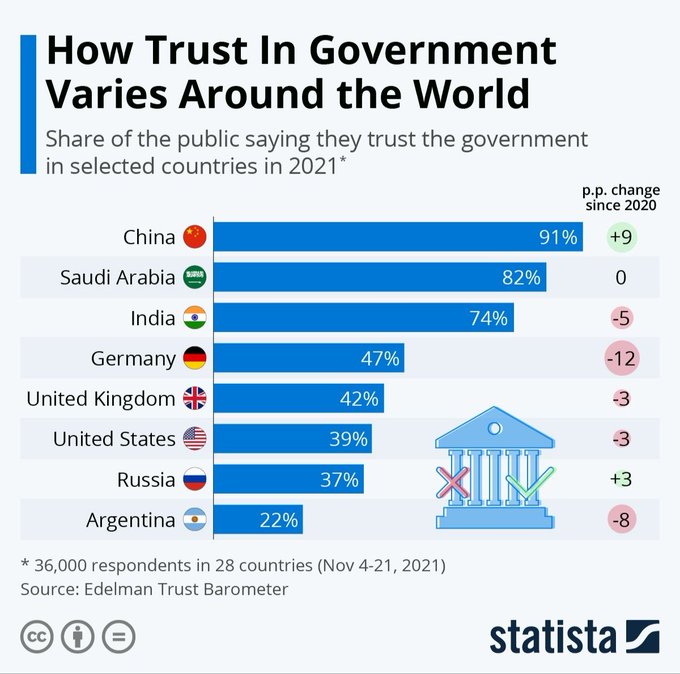
Surveys consistently show strong public support. The Harvard Ash Center’s long-term surveys (2003–2016) found satisfaction with the central government rising to 93–95.5% — far higher than typical U.S. federal government satisfaction ratings in comparable polls. In 2020, 90% satisfaction with the government was found by Harvard as well.
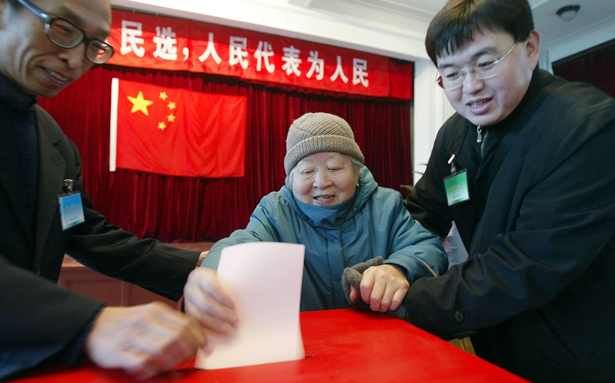
Other international surveys, including the World Values Survey, show trust in China’s national government exceeding 90% in recent waves. Chinese citizens overwhelmingly view democracy as important and see their system as delivering it through effective governance that serves the broad population. In contrast, a landmark 2014 study by Princeton University’s Martin Gilens and Benjamin Page found that in the United States, economic elites and organized business interests have substantial independent influence on policy, while average citizens have “little or no independent influence.”
Media Coverage: Facts vs. Framing
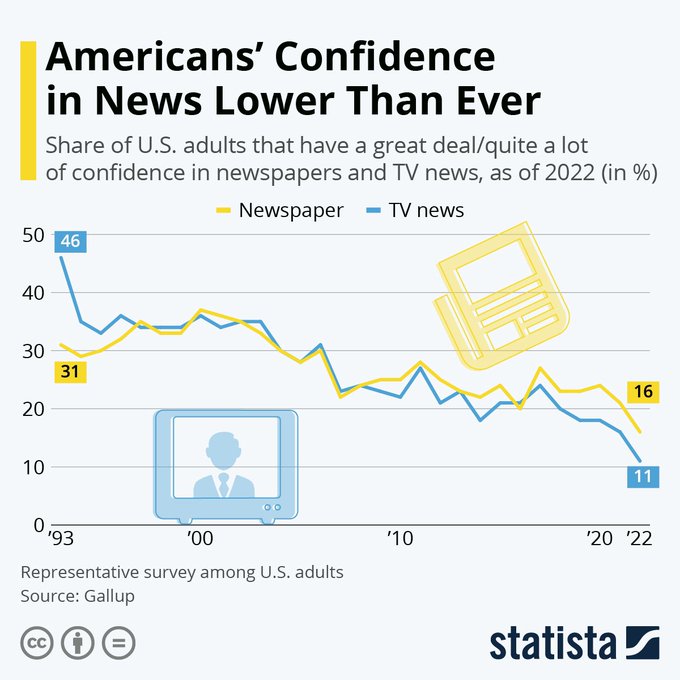
Chinese media routinely covers the U.S. democratic system in detail, elections, debates, strengths like innovation and rule of law, and challenges like political polarization, inequality, gun violence, and gridlock. Coverage is often factual and analytical. However, much Western media frames China’s system simplistically as “authoritarian” or lacking democracy, frequently without deep engagement with its consultative mechanisms, grassroots elections, performance-based leadership, or public satisfaction data. This asymmetry does a disservice to genuine understanding.
Conclusion: A Democracy Built for Results and Inclusion
I live in China, born and raised in the USA; I’ve moved to China in my mid-thirties. I’ve been here for 14 years. I’ve met thousands of people living here, Chinese and foreigners too. These studies reflect the reality we experience here in China. The government is actively improving peoples’ lives in line with the hopes of the ordinary worker.
Whether you agree with every aspect or not, understanding how China’s democracy actually works reveals a sophisticated, people-centered approach that has delivered extraordinary development and high public approval. It is consultative, meritocratic, inclusive across diversity, and remarkably responsive.



 The Shared Future Institute