
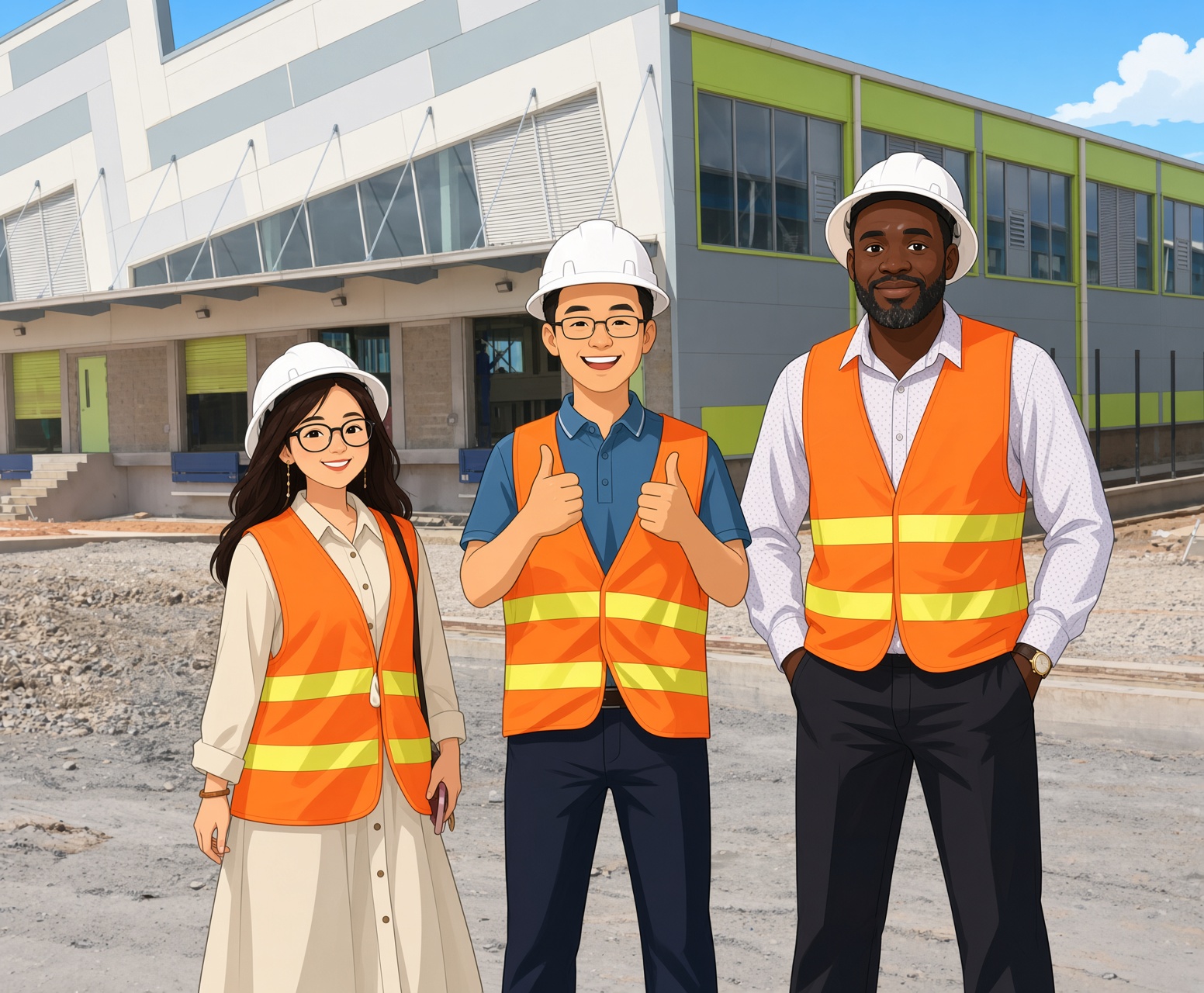
Dr. Kwame Nkrumah said that “Foremost among the neo-colonialists is the United States.” So, it comes as something of a surprise to the erudite to hear the Western expressed concern about China’s involvement in the development of Africa and other underdeveloped parts of the world. But it really comes down to one question. Is China helping these nations build a foundation upon which sustained development can take place? It is well documented that China has built dozens of hospitals, schools, roads, ports, power facilities, and other such critical infrastructure. But the most critical piece of this puzzle, according to African writers, is that of the ability to add value to raw materials at home instead of abroad. Let’s take an overview of the thoughts of these great thinkers, then come back to China’s role in all of this.

In the critical book How Europe Underdeveloped Africa, published in 1972, African Walker Rodney argued that colonial policy was designed to keep Africa as a quarry and plantation, not an industrial economy. Africans were to “dig minerals out of the subsoil, grow crops, collect natural products”; Europeans would refine the materials and manufacture the goods. He pointed to the resulting absurdities: Sudan and Uganda grew cotton but imported cotton cloth; Côte d’Ivoire grew cacao but imported chocolate. When West Africans tried to mill their own groundnut oil in the 1920s, French authorities blocked them. Mining left holes in the ground and cash-crop farming exhausted soils, while the same materials-built Europe’s industrial complex. The trade was unequal exchange: Africa sold cheap primaries and bought expensive manufactures.

The Egyptian economist Samir Amin, who spent much of his career in Africa, described the same relationship as “unequal exchange.” Products from the periphery are sold at prices that do not reflect the labor and resources embodied in them, because wages and resource rents are suppressed. The result is a net transfer of value from Africa to the industrial centers. Peripheral economies become “extraverted”: they produce what the center needs (raw cotton, copper, cocoa, oil) rather than what their own populations need, and they remain dependent on imported manufactures. Amin called the extra profit extracted this way “imperialist rent.” Imperialism, for him, is the fusion of monopoly capital’s need to reproduce itself with political control over the terms of that unequal trade.

Tanzania’s first president Julius Nyerere, treated the raw-material trap as the practical meaning of imperialism after independence. Poor countries, he said, must sell ever more sisal, cotton or copper just to buy the same machines year after year. The only way out was to process their own primary products and become price-makers rather than price-takers. The Arusha Declaration therefore listed iron and steel, textiles, fertilizers and other processing industries among the “major means of production” that had to be under national control so that raw materials would feed African factories instead of foreign ones. Neo-colonialism, in his view, was the continued limitation of sovereignty by banks, credit systems and trade patterns that kept that processing from happening.

Kwame Nkrumah framed the same mechanism as the economic core of neo-colonialism: foreign capital is used “for the exploitation of labor, rather than for the development of the less developed parts of the world.” Africa’s earth is rich, yet “the products that come from above and below the soil continue to enrich, not Africans predominantly.” Political flags change; the division of labor—raw out, finished goods in—does not.
Across these writers, the definition is consistent: imperialism is not only political domination or military occupation. It is the organized prevention of value addition on African soil, by Africans, for Africa.
So, is China building factories in Africa? Is China transferring the knowledge to work in, operate, and manage these factories to Africans? Are Africans going to China to learn engineering, management, mathematics, science, and relevant technologies and returning to Africa to use those skills to add value to African products? China got rich, in part, through the development of Special Economic Zones, which pulled technologies and production together in areas with common outputs. The following are centers in Africa that China has championed to do the same with African partners.
SANY South Africa Industrial Park in Johannesburg, South Africa was commissioned in November 2025. The industrial park serves as SANY’s Southern Africa regional headquarters and manufacturing base. It localizes production of excavators and heavy equipment to serve the African market, shortens supply chains, provides logistics and after-sales support, and includes a dedicated talent/skills training center for technology transfer and upskilling local technicians and engineers. The park supports South Africa’s industrialization, job creation, and shift toward higher-value manufacturing under national development plans.

East Africa Commercial and Logistics Centre in Dar es Salaam, Tanzania was inaugurated in August 2025. It’s a Chinese-built investment of approximately US$170 million. It serves as a one-stop regional trade and logistics platform linking Tanzania and East and Central Africa. It integrates retail outlets, with over 2,000 spaces, bonded warehouses, customs clearance, e-commerce, showrooms, shipping coordination, and supply-chain finance. The center aims to reduce import costs and lead times, facilitate exports from the region, complement traditional markets, create tens of thousands of jobs, and position Dar es Salaam as a hub for cross-border commerce serving landlocked neighbors.

The Phoenix Park Industrial Estate in Point Lisas, Trinidad and Tobago officially opened/ in January 2024. China Export-Import Bank gave a concessional loan of US$104.295 million. It’s Trinidad and Tobago’s first modern BRI industrial park and a key tool for economic diversification away from energy dependence. It provides ready factory shells, full infrastructure, including 5G, and incentives for high-value manufacturing, assembly, logistics, warehousing, and related industries. It is designed to attract Chinese and international tenants and create thousands of jobs, enable nearshoring for North American/European markets, and stimulate local supply chains and exports.

Zambia Jiangxi Economic Cooperation Zone Warehouse began trial operations in December 2025. Chinese investment by Jiangxi state-owned enterprises was over US$200 million. It functions as an industrial and supply-chain platform focused on photovoltaic energy storage, power equipment manufacturing, copper processing/value addition, and related industries. The zone includes logistics and warehousing facilities to lower costs and links Jiangxi with southern African markets, creating local jobs, supporting skills development, and promoting beneficiation of Zambia’s mineral resources.
The Sihanoukville Special Economic Zone in Preah Sihanouk Province opened in May 2025. It’s a joint Chinese-Cambodian venture with historical Chinese financing support from Exim Bank. It’s a flagship BRI project and model of China-Cambodia industrial cooperation. It drives export-oriented manufacturing of textiles, garments, luggage, medical supplies, hardware, machinery, construction materials, furniture, auto parts, tires, and new materials while creating a full industrial-city ecosystem with supporting infrastructure: water, power, housing, education, and healthcare. The zone aims to boost Cambodia’s industrial development corridor, generate large-scale employment, increase trade volumes, attract multinational investors, and transfer industrial capacity and management experience from China to locals.

The China-Egypt TEDA Suez Economic and Trade Cooperation Zone is an ongoing national-level economic zone. Cumulative Chinese-linked investment was over US$3–3.8 billion by the end of 2025. It serves as a flagship platform for transferring Chinese industrial capacity and creating an “economic growth pole” on the Red Sea. It hosts manufacturing clusters in fiberglass, home appliances, ductile iron pipes/steel, textiles, chemicals, electronics, and logistics. The zone supports Egypt’s industrialization, import substitution, export growth, job creation, technology transfer, and integration into global value chains via the Suez Canal Economic Zone, while providing one-stop services and preferential policies for investors.

The Lekki Free Trade Zone and Lekki Deep Seaport in Lagos, Nigeria were completed in October 2022 and operational from 2023. The China Development Bank loan for port Phase 1 was US$629 million. It’s an integrated free-zone and deep-sea port complex designed to transform Lagos into a major West African trade and industrial hub. The zone attracts manufacturing, logistics, petrochemicals, and assembly industries with tax and customs incentives and modern infrastructure. The port reduces congestion, enables larger vessels, supports exports, generates massive employment and revenue projections, and creates synergies between port operations and inland industrial activity under a public-private partnership model with strong Chinese construction and financing roles.

The Djibouti International Free Trade Zone, first phase, was inaugurated on 5th July 2018. It’s Africa’s largest free-trade zone, modelled on China’s “Port-Park-City” approach. It develops logistics, bonded warehousing, export processing, manufacturing, trade, and commercial services to position Djibouti as a regional gateway for East Africa and beyond. The zone aims to diversify the economy, create jobs, attract global enterprises, reduce trade deficits, and leverage Djibouti’s strategic location near major shipping routes and the Ethiopia-Djibouti corridor.
The question of whether China is bringing local manufacturing and sustained economic development to Africa and other parts of the underdeveloped world has been answered. While the US used economic pressure to continue what the British and the French did to Africa by other means, China is following a completely different path. As we’ve shown in the above examples, China is bringing development to the underdeveloped world. Those are the facts, and they are not in dispute. The next time someone tries to tell you that China is engaging in neo-imperialism, you’ll know better.


Leave a Reply